


By 2026, the choice between PS5, Xbox Series X, and a gaming PC is less about which box is “best” and more about what kind of player you are. Console hardware is now mature, game engines are more demanding, and PC components have continued to improve with better GPUs, faster storage, and smarter upscaling. The result is a surprisingly close competition in some areas and a very clear winner in others.
TLDR: If you want the easiest, most consistent, and most affordable high-quality gaming experience, the PS5 is arguably the best overall value. If you care about subscriptions, backward compatibility, and ecosystem flexibility, the Xbox Series X remains a strong choice. If you want the highest frame rates, best visuals, mods, multitasking, and upgrade potential, a gaming PC wins on performance, but usually costs much more. For most players in 2026, consoles offer better value, while PC offers better ceiling performance.
Performance in 2026: Raw Power vs Real-World Results
Table of Contents
On paper, a modern gaming PC can easily outperform both the PS5 and Xbox Series X. A high-end PC with a recent GPU, fast DDR5 memory, and a strong multi-core processor can deliver smoother 4K gaming, higher frame rates, better ray tracing, and support for ultrawide monitors or high-refresh displays. However, the important phrase is high-end. A budget or older mid-range PC may not automatically beat the consoles, especially in demanding modern titles.
The PS5 and Xbox Series X were designed around fixed hardware, which is both a limitation and a strength. Developers know exactly what CPU, GPU, memory, and storage they are targeting. That allows games to be optimized more tightly than most PC releases. In 2026, many major console games still target a mix of 30 fps quality modes, 60 fps performance modes, and sometimes 120 fps modes for competitive or less graphically intense titles.

The Xbox Series X technically has slightly stronger GPU specifications than the base PS5, but real-world differences are often small. Some games perform a little better on Xbox, others run slightly better on PS5, and many are almost identical. The PS5’s fast storage architecture has also helped it feel very responsive, especially in first-party titles designed around quick loading and streaming.
A gaming PC, meanwhile, can scale far beyond console limits. If you are playing at 1440p with a powerful GPU, 120 fps or higher is realistic in many games. At 4K, high settings and ray tracing are possible with the right hardware, especially when using technologies like DLSS, FSR, or XeSS. But PC performance depends heavily on configuration, drivers, patches, thermals, and whether the game is well optimized.
Graphics Quality: Consoles Look Great, PC Can Look Better
Visually, the PS5 and Xbox Series X still hold up well in 2026. Developers have become better at extracting performance from them, and many games use clever reconstruction techniques to present crisp 4K-like images. Textures, lighting, animation, and world detail can be impressive, especially in big-budget exclusives or well-optimized multiplatform games.
However, PC has the advantage when it comes to maximum settings. On a strong gaming PC, you can often increase shadow quality, draw distance, texture filtering, ambient occlusion, reflections, and ray tracing beyond console settings. PC also supports more display options, such as ultrawide monitors, 240 Hz refresh rates, and custom resolutions.
That said, better graphics are not always obvious from the couch. If you play on a 55-inch TV from several feet away, the difference between console performance mode and high PC settings may be noticeable but not life-changing. If you play at a desk on a sharp monitor, the PC advantage becomes much more visible.
Frame Rates and Competitive Gaming
For competitive players, frame rate matters more than cinematic detail. This is where PC has a major advantage. Games such as shooters, racing titles, fighting games, and esports-focused releases benefit from lower input lag and higher refresh rates. A PC paired with a 144 Hz, 165 Hz, or 240 Hz monitor can feel dramatically smoother than a console locked to 60 fps.
Consoles are not weak here, though. Both PS5 and Xbox Series X support 120 Hz output in selected games, and many popular multiplayer titles include performance-focused modes. For most casual and semi-competitive players, 60 fps to 120 fps on console is more than enough. But if you are serious about maximizing reaction time, visual clarity, and low latency, PC is still the performance king.
Value: The Console Advantage Is Real
When discussing value, the consoles become much more convincing. A PS5 or Xbox Series X gives you a complete gaming system for a relatively predictable price. You do not need to compare motherboards, GPUs, power supplies, cooling systems, or compatibility charts. You buy the console, connect it to a TV, install games, and play.
A gaming PC can be a better long-term investment if you also use it for work, school, streaming, content creation, or modding. But if the question is purely gaming performance per dollar, consoles remain difficult to beat. Building or buying a PC that clearly outperforms PS5 and Xbox Series X usually costs substantially more once you include the GPU, CPU, RAM, SSD, case, power supply, operating system, keyboard, mouse, and possibly a monitor.
- Best upfront value: PS5 or Xbox Series X
- Best maximum performance: Gaming PC
- Best living room simplicity: PS5
- Best subscription value: Xbox Series X with Game Pass
- Best upgrade path: Gaming PC
Game Libraries and Exclusives
The PS5’s biggest strength is its exclusive and console-exclusive library. Sony’s first-party games are often polished, cinematic, and technically impressive. If you enjoy action-adventure games, story-driven experiences, high-end animation, and prestige single-player titles, the PS5 is very appealing. Even as more PlayStation games arrive on PC later, the console usually gets them first.
The Xbox Series X has a different advantage: ecosystem and services. Game Pass remains one of the strongest value propositions in gaming, especially for players who like trying many games instead of buying each title individually. Xbox also benefits from strong backward compatibility, cloud saves, cross-platform access, and integration with PC gaming through the Microsoft ecosystem.
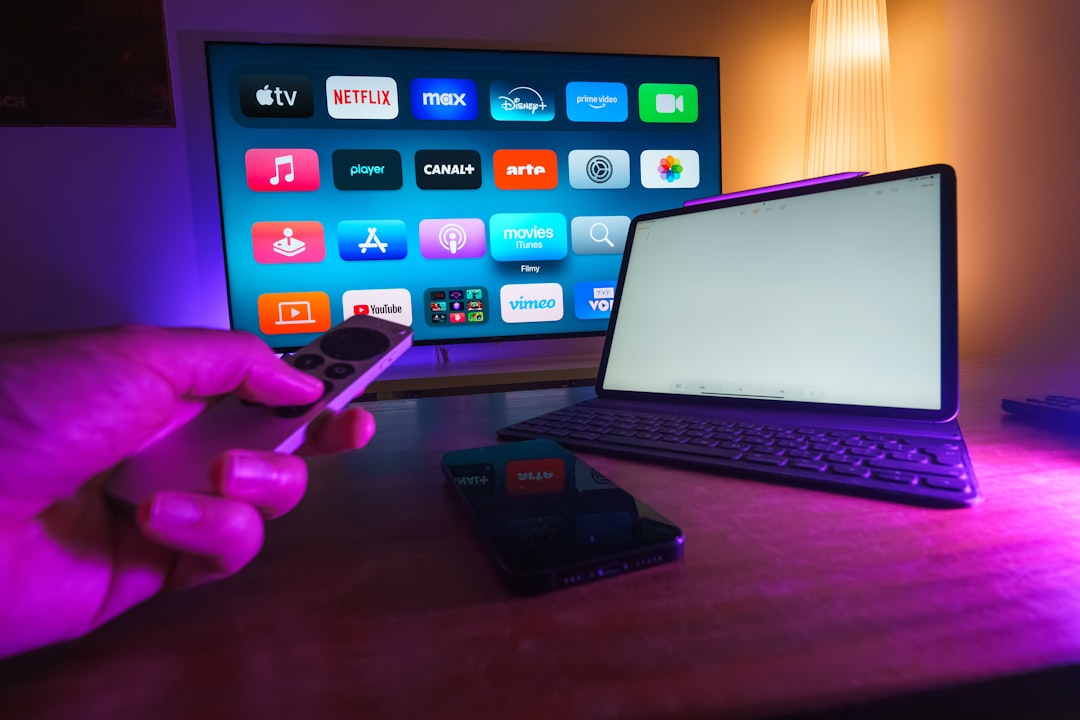
PC has the largest and most flexible library overall. Steam, Epic Games Store, GOG, Microsoft Store, itch.io, emulation communities, mods, early access titles, strategy games, simulation games, MMOs, and indie experiments all make PC incredibly broad. If you care about mods, custom servers, fan patches, or preserving older games, PC is unmatched.
Storage and Load Times
Fast SSD storage is now standard across all three platforms. The PS5 and Xbox Series X both load modern games quickly, and their SSDs were a massive leap over the previous console generation. In 2026, however, game file sizes are larger than ever, so storage expansion matters.
The PS5 allows internal SSD expansion with compatible NVMe drives, which has become more affordable over time. The Xbox Series X uses proprietary expansion cards, which are convenient but can be more expensive than standard PC-style SSDs. Gaming PCs offer the most flexibility, allowing multiple NVMe and SATA drives depending on the motherboard and case.
In day-to-day use, all three can feel fast. PC can be fastest with top-tier SSDs, but console load times are already short enough that storage speed is no longer the dramatic deciding factor it was at launch.
Ease of Use and Reliability
This is where consoles shine. A PS5 or Xbox Series X is simple, quiet enough for most rooms, and designed for controller-based play on a TV. Updates happen in a controlled environment, settings are limited but understandable, and games are usually configured automatically.
PC gaming is more powerful but also more complicated. You may need to adjust graphics settings, update drivers, troubleshoot crashes, manage launchers, check CPU bottlenecks, or deal with shader compilation issues. Many PC players enjoy that control, but others just want to relax after work and play without troubleshooting.
If you value convenience, the PS5 may be the most straightforward platform. If you value control, the gaming PC is much more rewarding.
Online Services and Hidden Costs
Console pricing can be slightly misleading because online multiplayer often requires a paid subscription. PlayStation Plus and Xbox Game Pass tiers add recurring costs, although they also include free monthly games, catalogs, discounts, or cloud features depending on the plan. Over several years, those fees can add up.
PC usually does not require a paid subscription for online multiplayer, which is a major advantage. PC games also go on deep sale frequently, and storefront competition can reduce long-term software costs. On the other hand, PC hardware upgrades can be expensive, and a demanding new game may push you toward a new GPU far sooner than expected.
Which Platform Has the Best Longevity?
Consoles have predictable lifespans. A PS5 or Xbox Series X bought in 2026 should still play major releases for years, although visual compromises will become more common as game engines advance. Developers will continue using dynamic resolution, reduced ray tracing, and performance modes to keep games running acceptably.
PC longevity depends on your starting point. A high-end PC can last many years with excellent performance, while a low-end PC may struggle quickly. The advantage is that you can upgrade piece by piece. Instead of replacing the entire system, you can add more storage, upgrade the GPU, install more RAM, or move to a better monitor.
Best Choice by Player Type
- Choose PS5 if: you want excellent exclusives, simple setup, strong performance, and a polished living room experience.
- Choose Xbox Series X if: you want Game Pass, backward compatibility, strong hardware, and a flexible Microsoft gaming ecosystem.
- Choose gaming PC if: you want the best frame rates, highest visual settings, mods, productivity features, and upgrade freedom.
- Choose console if: your budget is limited and you want reliable performance without technical complications.
- Choose PC if: you are willing to spend more to get a more customizable and powerful experience.
Final Verdict: Performance vs Value
If the question is which platform gives better performance in 2026, the answer is clearly gaming PC, assuming you have the budget for strong hardware. It can deliver higher frame rates, better ray tracing, sharper image quality, more display options, and a much larger range of settings.
If the question is which platform gives better value, the answer is more nuanced. The PS5 is arguably the best all-around value for players who want premium games, great performance, and minimal hassle. The Xbox Series X is excellent for players who want subscription-based access to a wide library and strong backward compatibility. A gaming PC offers the most power and versatility, but its value depends on whether you use that power beyond gaming.
In the end, the best platform is the one that matches your habits. For relaxed couch gaming, choose PS5 or Xbox Series X. For competitive gaming, mods, high-end visuals, and total control, choose PC. In 2026, consoles win on simplicity and price, but PC still owns the performance crown.
